Shibuya Food Tour Tokyo: 13 Dishes Through Dogenzaka, Center Gai & the Scramble
This Shibuya food tour takes a small group through the hidden basement izakayas, local eateries, and vibrant food alleys of Tokyo's most dynamic district — with a photo stop at the world-famous Shibuya Scramble Crossing included. Thirteen dishes and two drinks across four eateries in three hours. Here's everything you need to know. See how Shibuya stacks against the other street food tours in Tokyo.
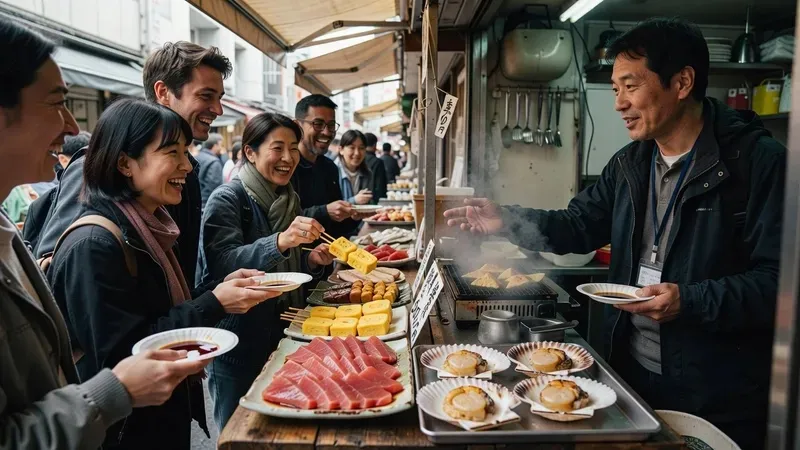
About This Activity
Up to 24 hours before — full refund
Secure your spot with no payment today
3 hours — evening departure
Shibuya Station Hachiko Exit, Tokyo
10 guests — small group format
13 dishes across 4 local eateries
2 drinks (alcoholic and non-alcoholic options)
Wheelchair accessible — full tour route
Check Live Availability & Prices
Real-time dates and prices for the Shibuya food tour — book directly through GetYourGuide with free cancellation.
Why Book the Shibuya Food Tour?
Shibuya is simultaneously one of the world's most recognizable districts — the Scramble Crossing has appeared in every travel magazine and film that's ever featured Tokyo — and one of the most underrated food destinations in the city. The restaurants that tourists default to near the crossing are almost universally tourist-facing and overpriced. The real Shibuya food scene is in the basement floors of the area's older buildings, in the narrow alleys of Dogenzaka that run uphill behind the station, and in Center Gai's standing bars that cater exclusively to the office workers and students who live and work in the area.
This shibuya food tour is also the most accessible of all the Tokyo street food tours — it's the only one explicitly designed for wheelchair users, with a route that navigates around the stepped and narrow sections that most of Shinjuku and Asakusa's izakaya alleys involve. All four eateries on the Shibuya route have ground-level or elevator access.
What You'll Eat and Where
Thirteen dishes across four eateries, focusing on modern Tokyo's food scene rather than traditional izakaya culture — though the best of the latter appears at stops three and four.
- Stop 1 — Japanese pub kitchen: karaage fried chicken, edamame, gyoza — the essential izakaya opener spread
- Stop 2 — hidden basement sushi counter: fresh nigiri and sashimi in a 10-seat basement room below Dogenzaka
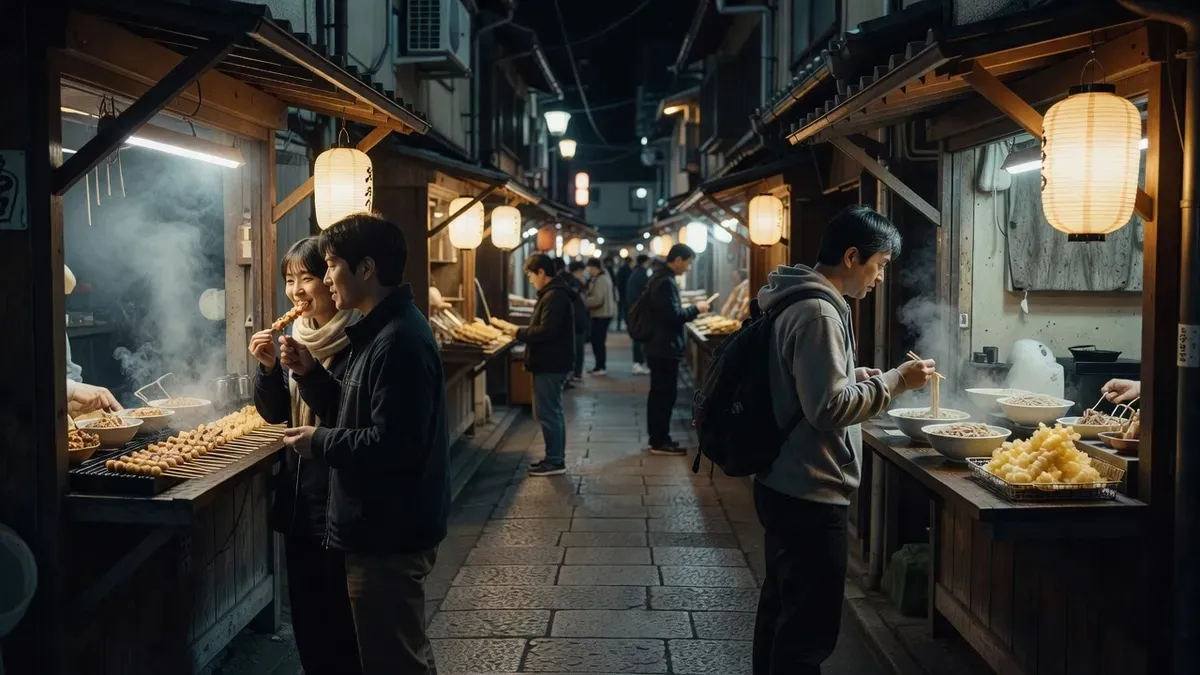
- Stop 3 — craft yakitori counter: premium yakitori cuts including liver, heart, and tsukune meatball alongside the standard thigh and wing
- Stop 4 — seasonal izakaya: the guide orders the kitchen's small plates for the group based on what's best that evening
The Scramble Crossing Photo Stop
Between the second and third eateries, the guide leads the group to the Shibuya Scramble Crossing — the pedestrian intersection where up to 3,000 people cross simultaneously from all angles. At night, with the neon of the surrounding buildings illuminating the crossing, it's one of Tokyo's great visual spectacles. The guide explains the crossing's infrastructure, the land use strategy that created it, and where the best angles for photography are.
You'll cross it once as part of the route, with time to photograph.
What's Included in the Price
The $100 per-person price includes:
- 13 dishes across 4 local eateries in Shibuya, Dogenzaka, and Center Gai
- 2 drinks (alcoholic or non-alcoholic)
- Expert English-speaking local guide for the full 3 hours
- Photo stop at the Shibuya Scramble Crossing with guide commentary
- Wheelchair accessible route — all venues on ground level or with elevator access
Not included
Extra food or drinks beyond the included items are at your own expense.
- Additional food or drinks beyond the 13 dishes and 2 drinks
- Transport to the Shibuya Station Hachiko Exit meeting point
- Gratuity for the guide — appreciated, not expected
How the Evening Flows
-
T−10 min
Meet at Hachiko Statue, Shibuya
The guide meets the group at the famous Hachiko dog statue outside Shibuya Station's Hachiko Exit — one of Tokyo's most recognizable meeting spots.
-
0:00
First stop — Japanese pub kitchen
A 5-minute walk to the first stop: a lively izakaya pub with open kitchen. Karaage, gyoza, and edamame arrive quickly. The guide introduces the izakaya format and how the evening will work.
-
0:40
Second stop — basement sushi counter
Down a flight of stairs into a 10-seat sushi counter. The chef cuts fresh nigiri and sashimi to order while the guide explains the fish, the sourcing, and seasonal variations.
-
1:20
Shibuya Scramble Crossing photo stop
The group walks to the Scramble Crossing. Time to photograph, cross, and hear the guide's commentary on the crossing's history and urban design. One of the best night photography spots in Tokyo.
-
1:40
Third stop — craft yakitori counter
A specialist yakitori counter in the alleys behind Center Gai — premium cuts including offal alongside the standard chicken skewers, over proper charcoal.
-
2:20
Fourth stop — seasonal izakaya
The final stop: the guide orders the kitchen's recommended small plates for the group. Seasonal Japanese ingredients, small-plates format.
-
3:00
Tour ends in Shibuya
The tour wraps near the final eatery. Shibuya's nightlife is just beginning — the guide can suggest bars, live music venues, and dessert spots for the rest of the evening.
Important Things to Know Before You Book
What to bring
Shibuya is a busy, urban environment — pack accordingly:
- Comfortable shoes — 2 to 3 km of walking across Shibuya's hilly terrain, including Dogenzaka's slope
- Camera or phone for the Scramble Crossing photo stop — this is one of Tokyo's best night photography locations
- Cash — some basement eateries in Shibuya don't accept foreign cards; ¥3,000 is a comfortable buffer
- Arrive hungry — the 13 dishes are calibrated as a full dinner spread over three hours
- Wheelchair users: confirm accessibility requirements at booking so the operator can prepare venue staff
Not allowed / restrictions
A few practical notes for the Shibuya tour:
- Maximum 10 guests — this is a strict cap due to venue size at the basement eateries
- Dietary restrictions (allergies, halal, vegetarian): contact the operator at booking to discuss — some flexibility exists at the Shibuya stops
- Large luggage is not permitted — the basement eateries have no storage; bring a day bag
- Photography at some eateries is at the guide's discretion — the chef may prefer guests not photograph the kitchen
Where to Meet — Shibuya Station Hachiko Exit
Who This Shibuya Food Tour Is (and Isn't) For
Perfect for:
- Travelers who want to combine iconic Tokyo sightseeing (the Scramble Crossing) with genuine local dining
- Wheelchair users and mobility-limited guests — this is the only fully accessible Tokyo street food tour
- Anyone staying in Shibuya who wants to explore their neighborhood's hidden food scene with an expert
- Groups of up to 10 who want a slightly larger but still intimate format
Not suitable for
While this tour is the most accessible of the Tokyo options, a few restrictions apply:
- Guests with severe shellfish or gluten allergies — cross-contamination is common at izakaya kitchens; notify the operator at booking
- Large tour groups over 10 — this tour has a strict cap; see the private tour for larger group options
- Travelers who want a traditional Edo-period atmosphere — Shibuya's food scene is modern and urban; see the Asakusa food tour for traditional Tokyo
Shibuya Food Tour FAQ
Is the Shibuya food tour wheelchair accessible?
Yes — this is explicitly listed as wheelchair accessible by the operator. All four eateries on the Shibuya route have ground-level or elevator access. If you use a wheelchair, confirm your specific requirements when booking so the operator can brief the venue staff in advance.
How does the Shibuya food tour compare to the Shinjuku tour?
Shibuya and Shinjuku offer different atmospheres: Shibuya is modern, neon-lit, and global in energy; Shinjuku's Omoide Yokocho alleys are more atmospheric and rooted in postwar Tokyo. The Shibuya tour also includes the Scramble Crossing photo stop and is wheelchair accessible, while the Shinjuku food tour has a more intimate alley setting. Shibuya is priced at $100 vs $82 for Shinjuku.
Why is the Shibuya food tour more expensive than the Asakusa tour?
Two reasons: the Shibuya Scramble Crossing stop adds operational time to the tour, and Shibuya's eateries — particularly the basement sushi counter and craft yakitori spots — operate at higher ingredient cost than Asakusa's traditional izakayas. The Asakusa food tour at $70 for 15 dishes is the better budget option; the Shibuya tour at $100 offers the Scramble Crossing experience and full wheelchair accessibility.
What's the best time of year for the Shibuya food tour?
Year-round. Shibuya's covered eateries make it comfortable in any season. The Scramble Crossing is especially photogenic on clear nights in autumn (October-November) when the surrounding ginkgo trees turn gold. Spring cherry blossom season (late March to mid-April) creates peak crowds in Shibuya — book earlier for those dates.
What Guests Say
The Shibuya Scramble Crossing at night with a guide who explains what you're actually looking at is something completely different from just walking through. And then the basement izakayas — I would never have found those on my own. Four stops, 13 dishes, and I ended the evening understanding Shibuya in a way no guidebook conveyed.
I appreciated that the guide walked us past the tourist restaurants without stopping. Every place we ate was clearly a local spot — small menus, no photos on the walls, kitchen visible from the counter. That authenticity is what you're paying for.
Group was limited to 10 and I'm glad — any larger and the eateries we visited couldn't have accommodated us. The guide was knowledgeable about Shibuya's changing food scene, explained why certain old izakayas are surviving the gentrification of Center Gai. Great context alongside great food.